


"Inoperable Vehicle" Title Brand: What It Means for Buyers and Sellers
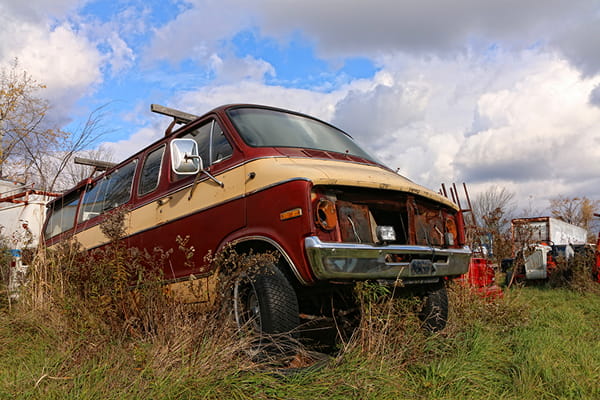
- "Inoperable Vehicle" Title Brand: What It Means for Buyers and Sellers
- What Is an "Inoperable Vehicle" Title Brand?
- How Does a Vehicle Get an "Inoperable Vehicle" Title Brand?
- Sub-Types / Related Title Brands
- Who Assigns the "Inoperable Vehicle" Title Brand and Where It's Recorded
- How States Handle the "Inoperable Vehicle" Title Brand
- Impact of an "Inoperable Vehicle" Title Brand
- Should You Buy an "Inoperable Vehicle"?
- FAQs About "Inoperable Vehicle" Title Brand
- FREE Vehicle Search
Used car shoppers usually focus on mileage, condition, and price. However, failing to be alert to title brands can be a costly mistake. A title brand is a notation applied by the DMV to alert consumers, dealers, and third parties about a vehicle's condition, status, or ownership history. Some classifications can impact how an automobile is used, insured, and resold.
Brands like "Former Rental" or "Taxi" point to fleet service, while others, such as "Antique" or "Classic", are mostly age-based. More serious consequences come from damage-related brands. Typical examples include "Flood", "Salvage", and "Rebuilt". The "Inoperable Vehicle" Title Brand also deserves consideration because it can limit titling and registration options.
Let's break down the details of this impactful title brand so you can be a better-informed consumer.
What Is an "Inoperable Vehicle" Title Brand?
In simplest terms, an "Inoperable Vehicle" Title Brand identifies a vehicle that can't be safely operated on public roads in its current condition. However, there's more involved. The American Association of Motor Vehicle Administrators (AAMVA) uses this definition as a reference, but states decide how title brands are actually applied:
A motor vehicle that is substantially disassembled and for this reason is mechanically unfit or unsafe to be operated or moved upon a public street, highway, or public vehicular area. An "inoperable vehicle" has not been identified as either "junk" or "salvage". Inoperable vehicles may be titled, but no registration may be issued until such time that the vehicle has been determined roadworthy according to state regulations.
Clearly, such cars aren't something the average buyer will want to deal with. The damage goes way beyond cosmetic issues or routine wear, making such vehicles unsuitable for even occasional use.
The challenge comes with being watchful about this designation. At the federal level, this status is recognized through the National Motor Vehicle Title Information System (NMVTIS) as Brand Code 54: Inoperable Vehicle. NMVTIS is a database that collects and reports title and brand data, especially across state lines. However, the use of uniform terminology, including for the Inoperable Vehicle Title Brand, is inconsistent among jurisdictions. These differences are highlighted below.
Typical situations that lead to this title brand being applied can include catastrophic mechanical failure, severe accident damage, fire exposure, or flood damage that compromises critical systems. In some cases, the vehicle may be partially disassembled or missing essential components, making operation unsafe or impossible.
Ultimately, the Inoperable Vehicle Title Brand is about consumer protection. This classification, when present in official title records, prevents unsafe cars from returning to market and advises buyers about their potential purchases. This protection may occur through equivalent title brands in states that don't use the "Inoperable Vehicle" label.
How Does a Vehicle Get an "Inoperable Vehicle" Title Brand?
The Inoperable Vehicle Title Brand is not automatically triggered after a specific incident. Instead, the classification occurs after a determination that the car can't be safely or legally driven in its current condition. What defines this action varies by state, but there's usually a progression, from damage to evaluation to formal title action. These steps describe a general process and may vary by state.
-
Change In Condition Occurs: The vehicle is severely damaged or deteriorates to the point that driving is unsafe. A crash or a flood can set things in motion, but there can be many other causes.
-
Official Determination: The car's condition undergoes a formal evaluation, followed by documentation. This step can be initiated by an insurance company (after a claim), a state inspection authority, or other governmental agency.
-
DMV Notification: Once the car's inoperable condition is verified, the determination is reported to the state motor vehicle agency through the reporting process for that jurisdiction (e.g., insurance notifications or inspection filings).
-
Title Action Occurs: The DMV adds the appropriate title notation or restriction. In a few states, the Inoperable Vehicle Title Brand is used. In contrast, others may apply a "Salvage" or "Non-Repairable" classification, even if NMVTIS may record the underlying status using Brand Code 54.
-
Return-to-Road Possibilities: Where permitted, the vehicle may be returned to public road use after comprehensive repairs and a follow-up inspection. In these cases, a Rebuilt or Reconstructed Title Brand may be used. This may replace or accompany the Inoperable Vehicle Title Brand on the printed title certificate, but an NMVTIS-based history report will show the complete reported title progression.
Sub-Types / Related Title Brands
Consumers may get confused because title branding terminology isn't uniform in every state. DMVs use a variety of terms that mean the same thing: a vehicle that's unsafe, uneconomical to repair, or permanently removed from road use. In short, an inoperable vehicle can be called different terms depending on the jurisdiction.
Inoperable Vehicle
The Inoperable Vehicle Title Brand is the most direct classification for a car that isn't legal or safe to drive and is tracked as NMVTIS Brand Code 54. States that use this terminology treat the vehicle as undrivable unless and until substantial corrective action is taken.
Salvage / Total Loss
A Salvage Title Brand is often accompanied by inoperable status. This can occur when an insurance company declares a vehicle a total loss because repairs exceed a certain percentage of the vehicle's value or because the car can't be repaired to a safe condition. Sometimes a salvage vehicle is drivable; other times, it's inoperable. Salvage focuses on the repair economics, while inoperability addresses current usability.
Dismantled / Parts Only
The Dismantled Title Brand (also known as Parts Only classification) indicates inoperable vehicles that have been permanently removed from road use and can't be legally driven again in many states. These cars are ineligible for rebuilding and become sources for parts and scrap metal.
Rebuilt / Reconstructed
A Rebuilt or Reconstructed Title Brand may be assigned if a vehicle with an Inoperable or Salvage Vehicle Title Brand has been fully repaired and inspected. This title change doesn't remove the prior history, which is accessible through an NMVTIS-based history report.
Who Assigns the "Inoperable Vehicle" Title Brand and Where It's Recorded
A state motor vehicle agency is generally the authority for assigning an Inoperable Vehicle Title Brand. Such action doesn't happen by chance; the DMV relies on information from insurers, inspections, or law enforcement reports.
Once assigned, the classification can be captured in several places. Depending on the jurisdiction, the brand may be added to the printed title certificate. An electronic record is submitted to the state's motor vehicle database and NMVTIS, which compiles title and brand information for nationwide access.
Vehicle history report providers such as GoodCar gather this information from NMVTIS and show it in reports associated with a specific vehicle identification number (VIN). Because states use different wording, an inoperable vehicle may not always be labeled the same way, but the underlying status is still recorded.
How States Handle the "Inoperable Vehicle" Title Brand
Although NMVTIS recognizes Brand Code 54, states differ significantly in how the concept is applied. Here's how select states manage the process.
Explicit Use in the Titling Framework
State |
How "Inoperable" Is Used |
Title / NMVTIS Relevance |
|---|---|---|
North Carolina |
State law and DMV manuals explicitly define and process "Inoperable Vehicles", describing vehicles that are substantially disassembled or mechanically unsafe. Registration is blocked until operability is restored. |
Closest real-world analog to NMVTIS Brand Code 54; title-adjacent usage even when not always printed as a standalone consumer brand. |
Statutory or Administrative Use
State |
How "Inoperable" Is Used |
Title / NMVTIS Relevance |
|---|---|---|
Nevada |
DMV guidance defines "inoperable vehicle" as one not economically repairable; handled through junk or non-repairable processes. |
Definitional use only; no distinct Inoperable Vehicle Title Brand. |
Utah |
Statutes reference abandoned and inoperable vehicles for disposal and yard regulation. |
Operational context only, not a titling designation. |
Colorado |
"Inoperable and Stored Vehicles" program regulates storage and registration status with decals and annual requirements. |
Administrative program, not a title brand; not reported as NMVTIS Code 54. |
Recognition or Mapping Only
State |
How "Inoperable" Is Used |
Title / NMVTIS Relevance |
|---|---|---|
Virginia |
"Inoperable" is embedded within the non-repairable definition and appears in forms referencing equivalent out-of-state dispositions. |
Does not issue an Inoperable Vehicle Title but recognizes and maps the concept from other states. |
Impact of an "Inoperable Vehicle" Title Brand
An "Inoperable Vehicle" Title Brand has significant consequences on an automobile, as well as on buyers and sellers. Here's what you need to consider:
Resale Value
"Inoperable" translates into a vehicle worth a fraction of a clean-title counterpart. Buyers are most likely interested in dismantling the car for parts. Rebuilding may be an option, but such an effort may not be worthwhile or even possible.
Financing
Lenders use cars as loan collateral. An Inoperable Vehicle Title Brand automatically depresses resale value, making traditional financing unlikely. Transactions involving these types of automobiles are usually cash purchases.
Insurance
Insurance companies generally won't provide coverage for a vehicle that can't be driven on public roads. That changes if the car has been rebuilt and passes inspection. However, you may only be able to secure a liability-only policy; comprehensive and collision coverage could be unavailable.
Registration
Most of the time, a car with an Inoperable Vehicle Title Brand can't be registered for road use. However, registration may be possible if repairs are made and the vehicle meets the state's inspection requirements. Keep in mind that in some jurisdictions, registration is permanently prohibited.
Should You Buy an "Inoperable Vehicle"?
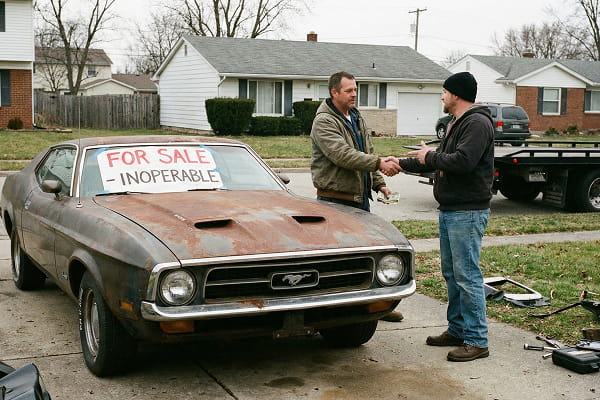
Whether buying a vehicle with an inoperable designation makes sense depends on intent. What do you want to do with the car? If it's just for parts, then you may have come across a great resource at a reasonable price. Things are less clear if you're looking for something that is or can become drivable. Consider the pros and cons of this type of purchase.
Pros |
Cons |
|---|---|
|
|
Buyer's Checklist
Before purchasing an inoperable vehicle, confirm whether it makes sense for your intended purpose (parts or return to road use).
-
Review the Physical Title: Inspect the certificate for "Inoperable Vehicle" wording or equivalent restrictions.
-
Order a Title Report: Obtain a title record from the DMV to verify branding.
-
Run a VIN History Report: Use an NMVTIS-approved provider like GoodCar to obtain a comprehensive vehicle history report identifying title brands and other critical background information.
-
Get a Mechanic's Evaluation: Depending on your intent, have a qualified mechanic inspect the car to confirm component condition or determine whether restoration is technically feasible and financially realistic.
-
Confirm DMV Eligibility: Verify whether the vehicle can be retitled or registered after repairs.
FAQs About "Inoperable Vehicle" Title Brand
State rules for Inoperable Vehicle Title Brands vary. Always check with the DMV before purchasing or registering a car with this designation.
- "Inoperable Vehicle" Title Brand: What It Means for Buyers and Sellers
- What Is an "Inoperable Vehicle" Title Brand?
- How Does a Vehicle Get an "Inoperable Vehicle" Title Brand?
- Sub-Types / Related Title Brands
- Who Assigns the "Inoperable Vehicle" Title Brand and Where It's Recorded
- How States Handle the "Inoperable Vehicle" Title Brand
- Impact of an "Inoperable Vehicle" Title Brand
- Should You Buy an "Inoperable Vehicle"?
- FAQs About "Inoperable Vehicle" Title Brand
- FREE Vehicle Search
FREE Vehicle Search
- Accidents
- Problem Checks
- Title Records
- Recalls
- Values
- Specs


-
 InfoPay, Inc. (dba GoodCar) is an Approved NMVTIS Data Provider
-

-
