


Theft-Recovered Car Titles Explained
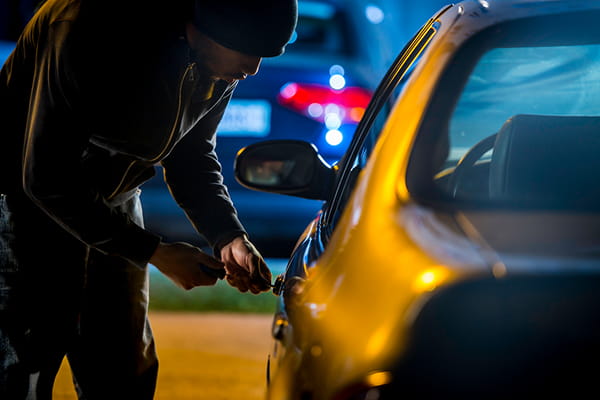
- Theft-Recovered Car Titles Explained
- What Is a "Theft-Recovered Vehicle" Title Brand?
- How Does a Car Get a Theft-Recovered Title Brand?
- Sub-Types / Related Title Brands
- Who Assigns the Theft-Recovered Title Brand & Where It's Recorded
- Impact of a "Theft-Recovered" Title Brand
- Can a "Theft-Recovered" Title Be Changed or Fixed?
- Buyer and Seller Responsibilities
- Should You Buy a Theft-Recovered Vehicle?
- Statistics & Market Data
- How to Check for Theft-Recovered Title Brands
- FAQs About Theft-Recovered Vehicle Title Brand
- FREE Vehicle Search
Although the average car owner may be unfamiliar with a title brand, it's a permanent designation on a vehicle's certificate of title. This notation covers various situations, such as salvage status due to an accident or flood, a lemon law buyback, an odometer discrepancy, or theft recovery. These brands affect a vehicle's value, provide vital background details, and help consumers make informed purchasing decisions.
Although some title brands are easier to understand, the theft-recovered designation is less clear because states handle the classification differently. In addition, many damage-based brands are associated with clearly identifiable physical problems, while a Theft-Recovered Title Brand can be present with a fully functional vehicle. This confusion can be challenging for used car buyers and sellers.
What Is a "Theft-Recovered Vehicle" Title Brand?
The theft-recovered vehicle title brand occurs after a vehicle is reported stolen, an insurance claim is paid, and the car is recovered. The details are covered below, but the primary factor is the involvement of the insurance company, which takes ownership of the vehicle when there is payment for the loss. If the car is later recovered, some states mandate that the Theft-Recovered Title Brand be applied even if there's little or no damage.
According to the National Insurance Crime Bureau, over 85% of stolen passenger vehicles are eventually recovered, with about one-third recovered within a day of being reported stolen. Despite these high recovery rates, the Theft-Recovered Title Brand can become a permanent part of the vehicle's record in many states.
This brand alerts potential buyers about a once-stolen vehicle involved in an insurance claim. The resulting transparency helps prospective purchasers approach these vehicles cautiously for possible hidden damage or missing components.
How Does a Car Get a Theft-Recovered Title Brand?
A Theft-Recovered Title Brand involves a sequence of events with the vehicle owner, the insurance company, law enforcement, and the state motor vehicle agency. Here's a breakdown of each party's role in the process.
Step 1: Theft Report and Insurance Claim
The car's owner files a police report about the theft and submits an insurance claim for the loss. The insurance company reviews the claim to determine if it will pay the owner.
Step 2: Insurance Settlement
If the insurance carrier accepts the claim and the vehicle isn't recovered, the payout will usually be made after a waiting period (typically 30 days). At this point, the company declares the car a total loss and pays the owner. Ownership is transferred to the insurance company, which notifies the state DMV. Whether a Theft-Recovered Title Brand is applied depends on the insurance settlement and the specific rules of the state DMV. Some states automatically apply the brand after a payout, while others only do so if there's significant damage.
Step 3: Vehicle Recovery
If law enforcement recovers the stolen vehicle, which is usually the case, the agency will update the NMVTIS (National Motor Vehicle Title Information System) database. The update is reported to the insurance company and the state DMV.
Step 4: Title Brand Application
Depending on the state, the DMV may apply the Theft-Recovered Title Brand or a variation of this designation, regardless of the vehicle's condition.
Step 5: Vehicle Disposition
In some instances, the owner may be able to purchase the recovered stolen vehicle from the insurance company. However, the car is often sold at auction under a theft-recovered or other title brand.
What is NMVTIS?
The National Motor Vehicle Title Information System (NMVTIS) is a federal database that tracks vehicle titles, brands, and theft records nationwide to prevent fraud and protect consumers. Because NMVTIS itself is not directly accessible to the public, consumers must obtain this information through an approved provider such as GoodCar.
State Variations in Theft-Recovery Branding
Title branding requirements for stolen and recovered vehicles vary by state. The following table shows how select states handle Theft-Recovered Title Brands:
State |
Title Brand Used |
How It's Applied |
|---|---|---|
Arizona |
Stolen Vehicle Certificate / Recovered Theft |
Allows regular titles for recovered theft vehicles if not wrecked/stripped, and no airbag deployment occurred |
Georgia |
Recovered Theft Provisions |
Specific process for stolen/recovered vehicles; branding depends on damage level (cosmetic vs. structural) |
Massachusetts |
Recovered Theft Title |
Issued to vehicles previously titled as salvage-repairable with theft sub-brand after repair and inspection |
New York |
Stolen Vehicle Insurance Transfer Only |
Issues branded title "Stolen Vehicle Insurance Transfer Only" when proof of ownership is required for insurance transfer; stolen vehicle notations on title records |
Oklahoma |
Unrecovered-Theft / Recovered-Theft |
Issues unrecovered-theft title for stolen vehicles; upon recovery, transfers to the appropriate title type; requires declaration of theft recovery and damage extent |
Oregon |
No automatic brand |
Does NOT require a totaled/reconstructed title if the vehicle is recovered intact and insurer certifies NOT totaled per Oregon law; only branded if vehicle meets damage thresholds |
Pennsylvania |
Recovered Theft Brand |
Branded as "recovered-theft" if stolen and recovered; may combine with a reconstructed title if damage is over 50% of the replacement value |
South Dakota |
Recovered Theft Brand |
Recognizes recovered theft as an official brand; requires inspection within 45 days of recovery |
Texas |
Salvage (with exception) |
Texas law excludes undamaged recovered stolen vehicles from the definition of a salvage vehicle. |
West Virginia |
Recovered Theft |
Recently implemented the NMVTIS title brand 36 (recovered theft) |
Some states may require that stolen or stolen/recovered vehicles be reported, but may use a damage-based title brand (like salvage). Other jurisdictions may take the same approach only if the damage reaches a specific threshold. Meanwhile, other states mandate that intact (no-damage) recovered vehicles may receive a regular title.
Sub-Types / Related Title Brands
Whether you're buying or selling, it's good to be aware of title brand sub-categories related to a theft-recovered label, but they have more nuanced definitions. These subtypes aren't applicable in all states.
Theft-Recovered Salvage
The theft-recovered salvage designation applies when a recovered stolen vehicle has damage that meets a state's regular salvage threshold, usually 70-90% of the vehicle's actual cash value (ACV). Under these circumstances, the car not only has a theft history but has also been damaged due to a collision, vandalism, or parts stripping.
Rebuilt
A state may issue a rebuilt title (or some variation) for a professionally repaired theft-recovered vehicle that passes a mandated safety inspection. For example, Pennsylvania brands these vehicles as Reconstructed and Recovered Theft, following a total loss and extensive repair process. These vehicles are deemed roadworthy and can be registered, but retain a theft history.
Recovered & Undamaged
It's not unusual to encounter recovered stolen cars at auctions with minimal or no damage. Yet, if an insurance company has already paid a claim, these vehicles may have a branded title. Stolen cars recovered quickly (before the insurance company finalizes the claim) can often retain a clean title.
Who Assigns the Theft-Recovered Title Brand & Where It's Recorded
The designation of a Theft-Recovered Title Brand results from a coordinated effort between insurance companies, state motor vehicle agencies, and the federally managed NMVTIS database. After paying a stolen vehicle claim, the insurer notifies the appropriate state DMV. The process varies by jurisdiction. For instance, Georgia requires the insurance company to submit notice on letterhead signed by an authorized agent.
Once the information is on file with the DMV, future titles and registrations will reflect this title status. In addition, NMVTIS is updated. The federal system protects consumers by ensuring title brands follow the vehicle, even if the car is registered in different states. NMVTIS data is a critical component of vehicle history reports.
Impact of a "Theft-Recovered" Title Brand
A Theft-Recovered Title Brand can have real-world consequences for owners and buyers that impact finances and drivability.
Resale Value
Whether you're buying or selling, a car with a Theft-Recovered Title Brand experiences a significant drop in value. According to Kelley Blue Book, any vehicle with a "clouded" title can be worth 20-40% less than a comparable automobile with a clean title.
Financing
Expect challenges in obtaining a loan for a car with a Theft-Recovered Title Brand, as lenders tend to avoid high-risk situations. Finance companies willing to lend for these vehicles will likely require better credit ratings, larger down payments, higher interest rates, and shorter loan terms.
Insurance
Insurance companies are equally risk-averse when covering stolen and recovered vehicles. There can be uncertainty about the safety or the vehicle's condition. Available coverage may come at a higher price or with limitations (no available comprehensive or collision coverage).
Registration/Inspection
Registering a car with a theft-recovered or similar title brand may require additional steps. Some states mandate that these vehicles undergo a comprehensive inspection to ensure safe operation on public roads. Additional scrutiny could involve verifying that the vehicle identification number (VIN) is valid.
Can a "Theft-Recovered" Title Be Changed or Fixed?
For the most part, a Theft-Recovered Title Brand is permanent once the designation has been applied to a title. There's no legal way of getting around this indelible mark on a vehicle's title. However, some states permit title modifications under limited circumstances.
Pennsylvania may issue a "recovered theft" brand without a reconstructed designation if the repair costs don't exceed half the car's value. This doesn't eliminate the theft history, but it's considered a less severe title brand. Meanwhile, Massachusetts may issue a reconstructed or recovered theft title if the vehicle passes an inspection.
Certain states permit vehicles to progress from theft-recovered salvage to rebuilt or reconstructed title after repairs and inspection. This improvement may make the car more marketable, but it doesn't remove the theft history.
What is Title Washing?
Title washing is the illegal practice of titling a vehicle in a different state or manipulating paperwork to remove or conceal a branded title. Comprehensive vehicle history reports make title washing easier to spot.
Buyer and Seller Responsibilities
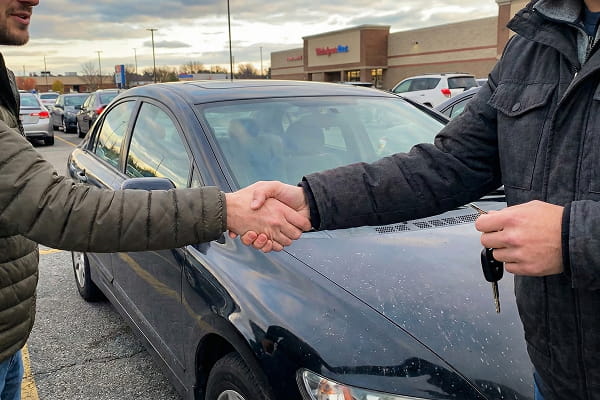
A transaction involving a vehicle with a Theft-Recovered Title Brand involves responsibilities for both the seller and buyer. Transparency from both sides can prevent unpleasant surprises and lead to a successful sale.
Seller Disclosure Requirements
First and foremost, a seller has an ethical and legal obligation to disclose known brand titles. Failure to do so could violate anti-fraud statutes, exposing the seller to criminal charges and civil lawsuits. While there's nothing illegal about selling a car with a branded title, this must be disclosed before completing the transaction. Including a VIN history report and any repair records can build trust and put the buyer's mind at ease.
Buyer Due Diligence
A buyer has to assume responsibility for doing their homework when buying any car, especially a used one. The first is getting a comprehensive vehicle history report to confirm what the seller says about the vehicle. You'll want to be alert for multiple recent owners and inconsistent odometer information. If available, police reports about the theft and recovery can provide additional insights about how long the vehicle was missing and its condition when found.
If things look promising, proceed with a professional mechanical inspection. Ideally, find an experienced technician who knows how to identify hidden damage. Despite how good a theft-recovered vehicle might look, unseen defects can be an underlying issue.
Should You Buy a Theft-Recovered Vehicle?
Buying a theft-recovered car depends on the individual vehicle, risk tolerance, and what's required to get it back on the road. Here's a pro vs. con look at what to consider:
PROS: Potential Benefits |
CONS: Risks and Drawbacks |
|---|---|
Significant Cost Savings: Substantially lower purchase price than a clean title vehicle. |
Financing & Insurance Challenges: Finding a lender and/or insurance may be difficult; a loan or coverage may cost more. |
Minimal Damage Potential: A stolen vehicle recovered quickly may have little to no damage. |
Reduced Resale Value: A lower purchase price translates into lower resale value; a branded title appeals to fewer buyers. |
Good Value for Skilled Buyers: A mechanic or experienced DIYer may be able to identify an excellent value. |
Hidden Issues Risk: Electrical issues, computer problems, or other undetected issues may surface later. |
Buyer Checklist
It's easy to get overwhelmed when shopping for a vehicle with a Theft-Recovered Title Brand. However, taking a step-by-step approach can make the tasks less daunting.
-
Vehicle History Report: Purchase a comprehensive vehicle history report to verify the car's details. You'll save time and money by first determining whether it's worth proceeding.
-
Police Report: While not always the easiest to obtain, public police records can provide clues about the car's recovery and condition before the title status changed.
-
State Title Report: Many state DMVs can provide a title status report for a fee. You can often do this online, although the information may not be immediately available. This is a good way to double-check the car's background, but generally, it isn't as complete as a full vehicle history report.
-
Insurance Costs: Before proceeding any further, check if insurance coverage is available for the car, and, if so, at what cost. You don't want to spend more time on the transaction if you can't drive the vehicle on public roads.
-
Pre-Purchase Inspection: If the vehicle's history and insurance aren't obstacles, move on to a thorough mechanical inspection by a trained technician. This will cost $150-$200; saving this step towards the end makes sense.
-
Review: The final decision about buying an automobile with a Theft-Recovered Title Brand comes from calculating the total cost of ownership, including potential repairs, reduced resale value, and insurance costs.
Statistics & Market Data
If you're new to theft-recovered vehicles, then it's wise to understand the marketplace better. The National Insurance Crime Bureau states that over 1,020,729 automobiles were reported stolen in 2023, a 1% increase from 2022. An even more eye-opening number is that motor vehicle thefts have risen by over 25% since 2019. California leads the nation with 202,685 motor vehicle thefts in 2022, followed by Texas with 105,015 thefts. Meanwhile, the District of Columbia saw the highest increase (64%) in motor vehicle thefts from 2022 to 2023, closely followed by Maryland at 63%.
Nationwide, some vehicles are more tempting targets than others. In 2023, the top five were the Hyundai Elantra, Hyundai Sonata, Kia Optima, Chevrolet Silverado 1500, and Kia Soul.
How to Check for Theft-Recovered Title Brands
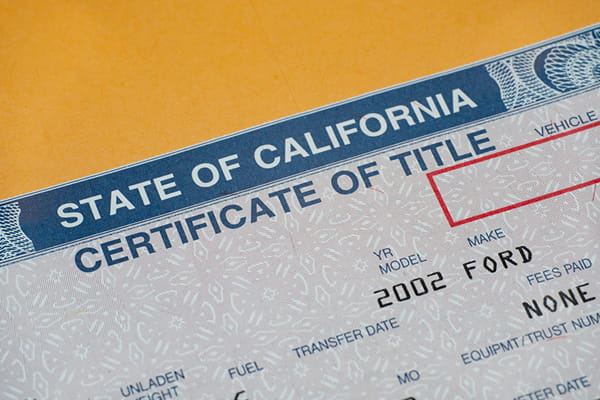
Verifying a vehicle's title status is a multi-step effort worth the time. Start by examining the car's physical title. Any title brand should be displayed prominently on the document. This is also a good opportunity to verify that the title is in the seller's name, to avoid the possibility of any deceptive tactics.
However, titles can be forged, so obtain a thorough vehicle history report to verify what's on the title certificate. Using an NMVTIS-approved provider like GoodCar can provide valuable insights about a vehicle's history, including title status. You'll want to look for title brands that indicate theft-recovered, salvage, flood, lemon law buyback, odometer rollback, or another designation. Keep in mind that a title can have more than one brand, depending on the state.
FAQs About Theft-Recovered Vehicle Title Brand
This article provides general information about theft-recovered vehicle title brands. Title laws vary significantly by state and are subject to change. Always verify current requirements with your state's motor vehicle agency before purchasing branded title vehicles.
- Theft-Recovered Car Titles Explained
- What Is a "Theft-Recovered Vehicle" Title Brand?
- How Does a Car Get a Theft-Recovered Title Brand?
- Sub-Types / Related Title Brands
- Who Assigns the Theft-Recovered Title Brand & Where It's Recorded
- Impact of a "Theft-Recovered" Title Brand
- Can a "Theft-Recovered" Title Be Changed or Fixed?
- Buyer and Seller Responsibilities
- Should You Buy a Theft-Recovered Vehicle?
- Statistics & Market Data
- How to Check for Theft-Recovered Title Brands
- FAQs About Theft-Recovered Vehicle Title Brand
- FREE Vehicle Search
FREE Vehicle Search
- Accidents
- Problem Checks
- Title Records
- Recalls
- Values
- Specs


-
 InfoPay, Inc. (dba GoodCar) is an Approved NMVTIS Data Provider
-

-
