


Understanding Undisclosed Liens on Vehicles
- Understanding Undisclosed Liens on Vehicles
- What Is an "Undisclosed Lien" Title Brand?
- How Does a Vehicle End Up with an "Undisclosed Lien" Title Brand?
- How States Handle the "Undisclosed Lien" Title Brand
- Types of Liens That May Be "Undisclosed"
- Impact of an "Undisclosed Lien" Title Brand
- Can an "Undisclosed Lien" Title Brand be Removed?
- Should You Buy a Vehicle with an "Undisclosed Lien" Title Brand?
- How to Check for an "Undisclosed Lien" Before Buying
- FAQs About the "Undisclosed Lien" Title Brand
- FREE Vehicle Search
When it comes to car titles, a few printed words can make a big difference. The phrasing, known as a "title brand", indicates something unusual in a car's history, such as an accident or other types of damage. You may know the "Salvage" or "Rebuilt" classifications, while less common brands include "Test Vehicle" and "Prior Taxi".
One designation you don't want to encounter after buying a vehicle is the "Undisclosed Lien" Title Brand, which indicates a person, business, or government entity may have a financial or legal claim against the car. While most other brands indicate a vehicle's condition or ownership history, this one signals an unresolved financial claim that can quickly become a significant headache for the buyer.
What Is an "Undisclosed Lien" Title Brand?
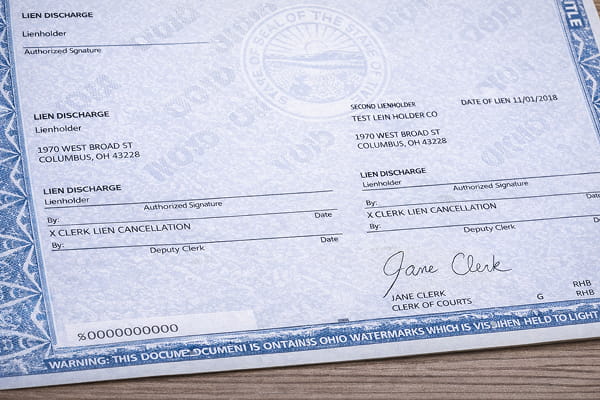
An Undisclosed Lien Title Brand is a warning that the car carries, or once had, a financial obligation (a lien)that wasn't satisfied or properly released before the title was transferred. In other words, the lienholder (a person, repair shop, financial institution, or court) may still have a legal interest in the vehicle. Given that 80% of new cars and 38% of used cars are financed, a lien on a title isn't unusual, but most liens are removed before the vehicle gets sold.
This title brand is a significant red flag, as the lienholder could repossess the vehicle or involve the new owner in an expensive legal dispute. The Undisclosed Lien Title Brand aligns with Brand Code 37, administered by the National Motor Vehicle Title Information System (NMVTIS). This federally-managed database tracks vehicle title histories and other information. This designation is added when a car is retitled from another state that doesn't show whether a past lien was cleared. Thus, the DMV flags the title to warn of possible unresolved claims.
How Does a Vehicle End Up with an "Undisclosed Lien" Title Brand?
When the Undisclosed Lien Title Brand appears, it's often due to a break in the paper trail between the previous owner, the lender, and the state motor vehicle agency. This can occur when the sale involves retitling in a different state or when the lien details aren't updated in an electronic titling system. The receiving DMV will err on the side of caution and issue an Undisclosed Lien notation if it can't confirm the lien was cleared. This doesn't mean the lien is still valid (it might be), but the status just couldn't be verified.
Here are different scenarios that can lead to an Undisclosed Lien Title Brand:
-
Seller Dishonesty: A previous owner might sell a financed vehicle without disclosing that the loan hasn't been paid in full. A Reddit conversation highlights the dangers of not checking a car's title status before purchase.
-
Delayed Paperwork: The lien release documentation may not reach the DMV before a new title is issued.
-
Timing Issues: The lien release may not come through until after the car has been sold or retitled.
-
Judgment Lien: A court may attach a lien on a vehicle due to unpaid child support or civil debt against the previous owner.
How States Handle the "Undisclosed Lien" Title Brand
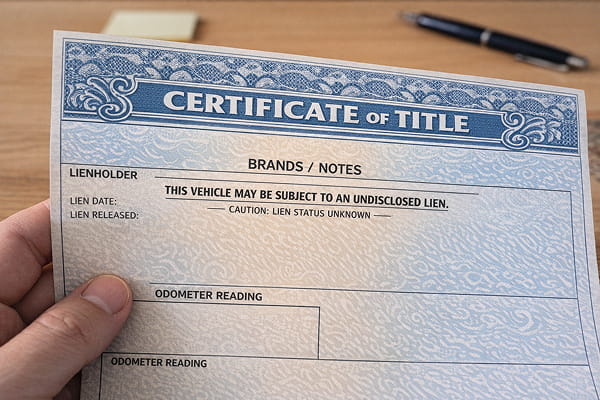
Although NMVTIS recognizes the Undisclosed Lien Title Brand (Brand Code 37), only a few states currently print or apply the notation to titles. Some jurisdictions use an equivalent warning when the vehicle is retitled from a state that doesn't record lienholders.
These select states either use the exact legend or a bonded-title variant that fulfills the same purpose:
State |
Title Legend / Equivalent Language |
Notes |
|---|---|---|
Alabama |
"This Vehicle May Be Subject to an Undisclosed Lien". |
Appears on titles from states that don't list lienholders; removable after four months. |
Connecticut |
"This Vehicle May Be Subject to Any Undisclosed Lien". |
Required by Conn. Gen. Stat. § 14-176 and DMV Regs. § 14-176-2. |
Georgia |
"This Title was issued on the basis of a surety bond and may be subject to undisclosed liens and claims against the vehicle". A surety bond is required to protect any previous owner or lienholder when the Georgia Department of Revenue/Motor Vehicle Division can't verify the complete ownership history. |
Printed on bonded titles; functional equivalent of Code 37. |
Maine |
"This Vehicle May Be Subject to an Undisclosed Lien". |
Required for distinctive titles when a prior jurisdiction doesn't record lienholders; language appears in Title 29-A § 658. |
Massachusetts |
"This Vehicle May Be Subject to an Undisclosed Lien". |
Mandated by M.G.L. c. 90D § 10. |
Minnesota |
"This Vehicle May Be Subject to an Undisclosed Lien". |
Statutory language under Minn. Stat. § 168A.05. |
Rhode Island |
"This Vehicle May Be Subject to an Undisclosed Lien". |
Required by R.I. Gen. Laws § 31-3.1-7(b). |
South Carolina |
"This Vehicle May Be Subject to an Undisclosed Lien". |
Included under S.C. Code § 56-19-110 for out-of-state transfers. |
Vermont |
"Title branded Undisclosed Lien". |
Applied when a vehicle without a prior title or registration is titled in Vermont. |
Importantly, when a vehicle is retitled in another state, the brand stays in NMVTIS, even if the receiving state's DMV doesn't print the designation on the title.
Types of Liens That May Be "Undisclosed"
A vehicle lien can originate from many sources and prevents the legal transfer of ownership until the lien is removed.
-
Auto Loan Lien: This is the most common type of vehicle lien; the lender maintains an interest in the vehicle until the loan is paid, and will issue a lien release when that occurs.
-
Mechanic's Lien: An individual mechanic or repair shop can file a lien for unpaid bills.
-
Judgment Lien: When financial judgments are unpaid, a court can attach a lien to a debtor's property, such as a car.
-
Tax Lien: Tax liens are less common and may target personal property; a vehicle may be included if specifically identified in a collection action.
Impact of an "Undisclosed Lien" Title Brand
A title brand usually hurts a vehicle's value. However, an Undisclosed Lien Title Brand is especially significant because it affects underlying ownership rights instead of repair quality or ownership history.
-
Repossession Risk: A vehicle with a valid lien and unpaid debt or judgment is vulnerable to repossession, even from an innocent buyer.
-
Title and Registration Problems: Many state DMVs won't title or transfer a vehicle with an open lien.
-
Financial Liability: The new owner may be required to pay the outstanding amount to obtain a clear title.
-
Legal Consequences: The new owner may have to take legal action against the seller to satisfy the outstanding debt or reverse the sale.
-
Resale Limitations: Few dealers or private buyers will want to purchase a vehicle with a questionable ownership history.
Remember that even after a lien is released, the brand can remain in electronic records and be visible in VIN-based vehicle reports.
Can an "Undisclosed Lien" Title Brand be Removed?
An Undisclosed Lien Title Brand can be removed only after the underlying debt is paid off and the lienholder submits a release. Once this happens, the applicable motor vehicle agency will issue an updated title certificate without the designation. However, the vehicle identification number (VIN) record, which reflects data from NMVTIS and state DMVs, will continue to show a previous Undisclosed Lien Title Brand.
Removing a title lien can take anywhere from a couple of days to a few weeks, with electronic processing being the quickest. If a court is involved, a lien release could take months. A buyer should always request written confirmation that the lien has been discharged and may want to verify the release directly with the lienholder.
Should You Buy a Vehicle with an "Undisclosed Lien" Title Brand?
It's best to avoid a car with an Undisclosed Lien Title Brand; either wait for the designation to be removed before buying or move on to a different vehicle. Weigh the benefits and risks before proceeding.
Pros
-
A possible below-market purchase price if the seller is motivated (and can help clear the title).
Cons
-
Potential for repossession by the lienholder.
-
Difficulty titling or registering the vehicle.
-
Possible legal consequences (of buying a car that someone else has a lawful claim to)
-
Reduced resale value due to a branded title history (even if the title is cleared), limiting buyer interest.
Buyer Checklist
It is always advisable to cautiously approach any vehicle with a branded title, but extra effort is necessary if it has an Undisclosed Lien designation.
-
Request written records of the lien release and verify this information with the lienholder.
-
Obtain a title report from the DMV to confirm the lien release has been received and processed (depending on the state, this may be done online or in writing).
-
Order a GoodCar vehicle history report to verify the title status and check for other background issues.
-
If the title hasn't yet cleared but appears likely to happen, use an escrow service to handle payment and ownership transfer.
-
Avoid cash-only transactions unless there's no doubt that the title is clear.
-
Keep copies of all transaction records and lien-related documentation (lien release, VIN reports, etc.). This information may help if you later sell or trade in the car. If the vehicle has recently changed states, confirm that the new title reflects all lien releases before registering it.
What to Do If You Discover an "Undisclosed Lien"
Acting quickly is essential if you've already purchased a car and discovered an outstanding lien.
-
Contact the Lienholder: Verify the debt and determine if it's been satisfied or the payoff amount.
-
Request a Lien Release: If the lien has been paid off, ask for official documentation and that it be sent to the DMV (you may also be able to submit this information).
-
Work with the Seller: If the lien is still active and predates your ownership, contact the seller to resolve the problem. Provide clear instructions on what the previous owner must do, the amount involved, and a precise deadline for when the action must be completed. Don't accept a payment plan for the outstanding amount, as the lienholder could repossess the car in the interim.
-
Seek Legal Advice: If the seller is uncooperative or there's a risk of repossession, contact an attorney for help.
How to Check for an "Undisclosed Lien" Before Buying

The best way to avoid dealing with an Undisclosed Lien Title Brand is to check before you buy.
-
Run a VIN History Report: Use an NMVTIS-approved provider like GoodCar to verify if the "Undisclosed Lien" Title Brand or any equivalent classification appears in the report.
-
Check State DMV: Some states operate lien registries or electronic titling systems that can provide title reports.
-
Ask for Paperwork: Request documentation from the seller confirming that the lien has been satisfied. This could include a lien-release letter or payoff receipt.
-
Verify with Lienholder: Double-check the car's paid-off status with the lienholder.
-
Use an Escrow Service: For a modest fee, an escrow company can verify title status, manage funds, and coordinate ownership transfer after the lien release is confirmed.
FAQs About the "Undisclosed Lien" Title Brand
This article explains the Undisclosed Lien Title Brand. Because title laws and lien-reporting requirements differ among states, always confirm current procedures with your state motor vehicle agency before purchasing or transferring a vehicle that carries any type of branded title.
- Understanding Undisclosed Liens on Vehicles
- What Is an "Undisclosed Lien" Title Brand?
- How Does a Vehicle End Up with an "Undisclosed Lien" Title Brand?
- How States Handle the "Undisclosed Lien" Title Brand
- Types of Liens That May Be "Undisclosed"
- Impact of an "Undisclosed Lien" Title Brand
- Can an "Undisclosed Lien" Title Brand be Removed?
- Should You Buy a Vehicle with an "Undisclosed Lien" Title Brand?
- How to Check for an "Undisclosed Lien" Before Buying
- FAQs About the "Undisclosed Lien" Title Brand
- FREE Vehicle Search
FREE Vehicle Search
- Accidents
- Problem Checks
- Title Records
- Recalls
- Values
- Specs


-
 InfoPay, Inc. (dba GoodCar) is an Approved NMVTIS Data Provider
-

-
